

Interviews are still underway, but some decisions have been coming out, and if you’ve applied to these highly competitive programs, you’re probably wondering what if I don’t get in?
You’ve worked so hard for it. Top SAT scores, AP exams with 4s and 5s, extracurriculars and research under your belt. If they don’t take you, is all that effort wasted?
I’m here to give you some bad news… These programs are incredibly selective, and it’s statistically more likely that you’ll be looking at a rejection letter than an acceptance.
BUT I also have some amazing news! you are a phenomenal candidate and you will become a doctor. Potentially, even sooner than your peers. Take it from someone who applied from high school, interviewed at many of these programs, and did not get in from high school, but still completed an accelerated BA/MD program and became an MD at 23.
It’s possible, because a rejection from BA/BS/MD/DO as a high school applicant is not the end of the fast track conversation. It is simply the end of one entry point.
First, let’s ground ourselves in reality. Combined medical programs are extraordinarily selective. According to data published by the AAMC and institutional reports, many of these programs accept well under 2-5% of applicants. These are not standard admissions cycles. They are hyper-selective pipelines.
So if you did not get in, statistically it’s because you are in very crowded company. That is not a reflection of your capability to become a physician nor your ability to do it on an accelerated timeline.
Many students who are competitive enough to even apply to BA/BS/MD/DO programs are also well positioned to accelerate through traditional pathways. They simply do not realize that acceleration exists outside of high school direct entry programs. That’s where my advice comes in.
The traditional route is not a single rigid four plus four formula. It is flexible if you understand the levers. You cannot leverage pathways you do not know exist.
The first lever is credit acceleration. Many institutions allow substantial AP, IB, or dual enrollment coursework to count toward graduation requirements, if you plan things correctly. But I’ve watched so many students waste their credits because they didn’t know how to make them count
The second lever is early assurance programs. These are formal pathways where students apply to medical school after their sophomore year of college. Some are also referred to as “second chance BA/MD,” which is what I did. The full list of these programs is on my website. These programs offer structured pipelines that eliminate or de-emphasize the MCAT in some cases and secure a conditional seat while you are still an undergraduate. They are competitive, but less so than the high school combined programs because the applicant pool has already narrowed.
The third lever is the three-year med schools. More than 30 LCME-accredited medical schools now offer three-year pathways. Institutions such as NYU Grossman School of Medicine, Penn State College of Medicine, and Texas Tech Health Sciences Center have formal accelerated tracks. These programs allow students to complete medical school in three years, often linked to a specific residency. Many are not limited to primary care, despite popular belief. The misconception that three-year programs are only for family medicine is outdated. The full list, by specialty, is also on my website.
Fourth, let’s address the psychological piece. Students often think that if they did not secure a seat from high school, the traditional path is the only path. I want you to zoom out and look at the timeline. If you graduate college in three years at 21 and enter a traditional four-year medical program, you are 25 at graduation. If you enter a three-year MD at 21, you are 24 at graduation. That’s the same age as the average age of matriculation for a first year medical student. Even if you take a gap year in between, you’re still ahead.
If you did not get into a BA/MD or BS/MD, your next step is not to grieve the label. It is to design the undergraduate phase properly. Choose a college where second chances exist, where you can thrive academically, protect your GPA, and where opportunities can help build your med school application, not just offer you a “big name.”
And why even do all this? Why plan for acceleration? Because we fall to the level of our systems, as James Clear writes. Design a system that catches you when you fall and prevents you from falling too far down. One gap year in medicine can easily turn into 2. Lost time, opportunity cost, earning potential, biological timelines, family planning, all come into play. It’s a long journey, and it can pay to be ahead of the game.
The students who succeed in this space are not the ones who obsess over the initial rejection. They are the ones who treat the process like a strategy.
I became a physician through acceleration not because I was handed a golden ticket in high school, but because I understood how to move pieces on the board. The pathway is wider than you think.
If you did not get into a combined program, you have not lost the fast track. You have simply moved to a different on-ramp.
Now is the time to move past “why didn’t I get in,” to “how do I engineer the next step?”
That is a much more powerful place to stand.
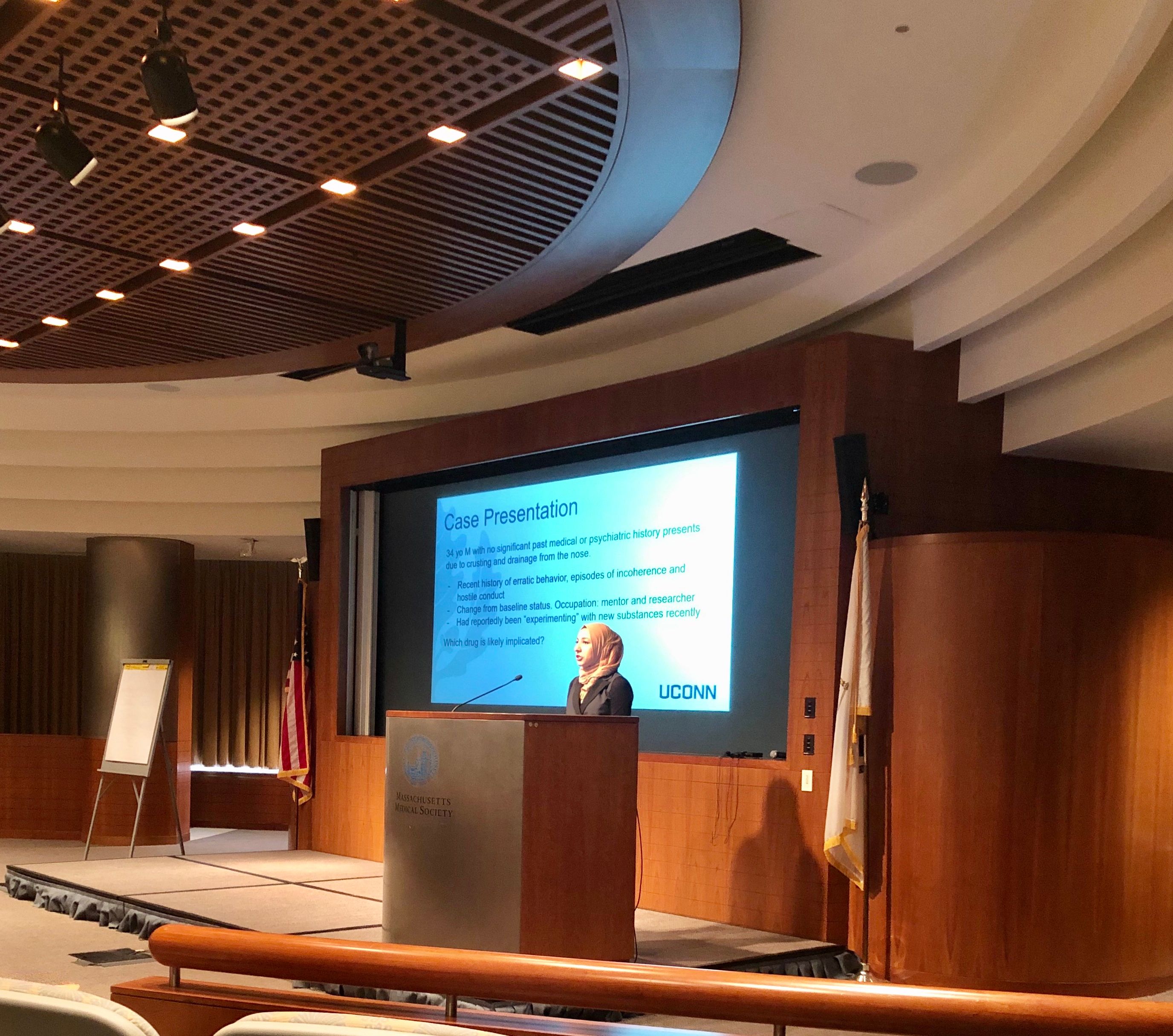
See you live on Sunday, Feb 22 at 7:30PM EST!
What students and parents are saying about Fast Track to MD:
“I feel like I’m meeting a mystical creature only found in fairytales”
“Thank you for insightful response and taking time to share your wisdom.”
“So insightful. That message about rank is really helpful as well”
“This is very helpful.”
“Your clarification means a lot”
“Students [online] get misguided and steered away…for the sake of prestige that means little in the long run.”
“Many students… regret not taking the opportunities that were more easily available at an earlier stage.”
“Your blogs are very informative. Thanks for spreading this awareness and clearing some misconceptions”
“There are many unsubstantiated comments [online], but nobody to take accountability for the decisions students make based on them”
“Thank you for taking the time to do this for everyone”
—
Want to stop losing time?
If this resonated, don’t let it be a one time insight.
Subscribe to our email newsletter to get important timeline alerts, early assurance and accelerated program updates, and practical guidance on when to act at each stage of the medical path. We send information when it matters, not noise.
Your future timeline is being shaped right now.
Make sure you’re actually informed while it’s happening..